Page
Monitoring climate change impacts on cultural heritage sites
Alvar Aalto Foundation is participating in three-year project on cultural heritage and climate change.
Read more
16. 3.
Monday
17. 3.
Tuesday
18. 3.
Wednesday
19. 3.
Thursday
20. 3.
Friday
21. 3.
Saturday
23. 3.
Monday
24. 3.
Tuesday
25. 3.
Wednesday
26. 3.
Thursday
27. 3.
Friday
28. 3.
Saturday
30. 3.
Monday
31. 3.
Tuesday
1. 4.
Wednesday
2. 4.
Thursday
3. 4.
Friday
4. 4.
Saturday
6. 4.
Monday
7. 4.
Tuesday
8. 4.
Wednesday
9. 4.
Thursday
10. 4.
Friday
11. 4.
Saturday
24. 4.
Friday
25. 4.
Saturday
27. 4.
Monday
28. 4.
Tuesday
29. 4.
Wednesday
30. 4.
Thursday
2. 5.
Saturday
4. 5.
Monday
5. 5.
Tuesday
6. 5.
Wednesday
7. 5.
Thursday
8. 5.
Friday
9. 5.
Saturday
11. 5.
Monday
12. 5.
Tuesday
13. 5.
Wednesday
14. 5.
Thursday
15. 5.
Friday
16. 5.
Saturday
18. 5.
Monday
19. 5.
Tuesday
20. 5.
Wednesday
21. 5.
Thursday
22. 5.
Friday
23. 5.
Saturday
25. 5.
Monday
26. 5.
Tuesday
27. 5.
Wednesday
28. 5.
Thursday
29. 5.
Friday
30. 5.
Saturday
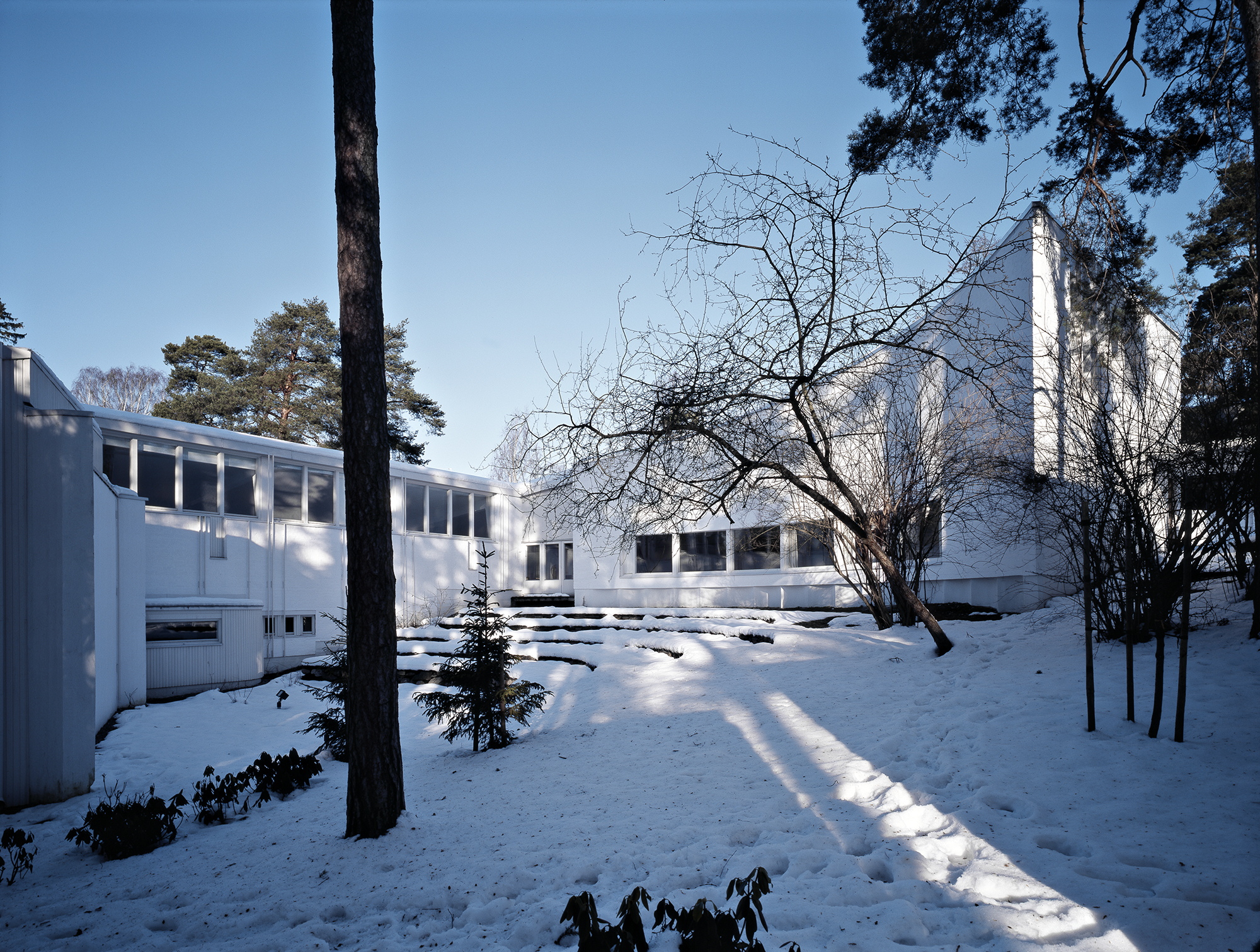
Climate change is increasingly affecting our built cultural heritage – historical buildings, archaeological sites, and cultural landscapes. In 2024–2027, the Alvar Aalto Foundation is participating in the three-year Cultural Heritage and Climate Change project aimed at developing methods for monitoring the effects of climate change on cultural-heritage sites.
The national Cultural Heritage and Climate Change project is examining the impact of climate change on built heritage in different climate zones under Finnish conditions. Information is being collected in case studies spanning 19 sites in geographically diverse parts of Finland that represent the built heritage of different eras and different types of structure in various climate zones. The aim is to create a monitoring method that can be used to produce standardised data on the effects of climate change on the built heritage. The data produced by the project will be used to plan the protection of and practical restoration measures for the built cultural heritage, and to draft national guidelines.
The network of experts created for the project will be able to apply the monitoring method and develop it further after the project has ended. Participating in the project from the Alvar Aalto Foundation are Architecture Researcher Tom Lammi, Architect Justiina Mäenpää, and Conservator Susanna Pusa.
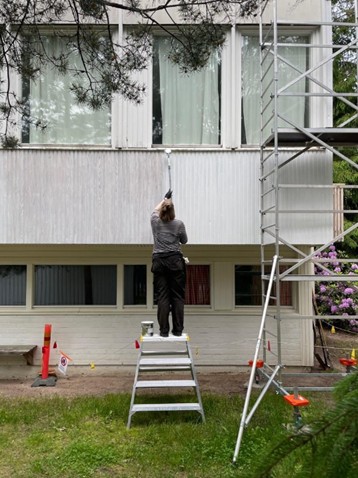
Alvar Aalto Foundation Conservator Susanna Pusa painting wooden panelling on the northwest wall of Studio Aalto in summer 2025. The four test fileds are part of the Cultural Heritage and Climate Change project, in which the Foundation is one participant. Photo Tom Lammi, Alvar Aalto Foundation.
The aim is to ensure the preservation of Aalto’s architectural heritage for future generations
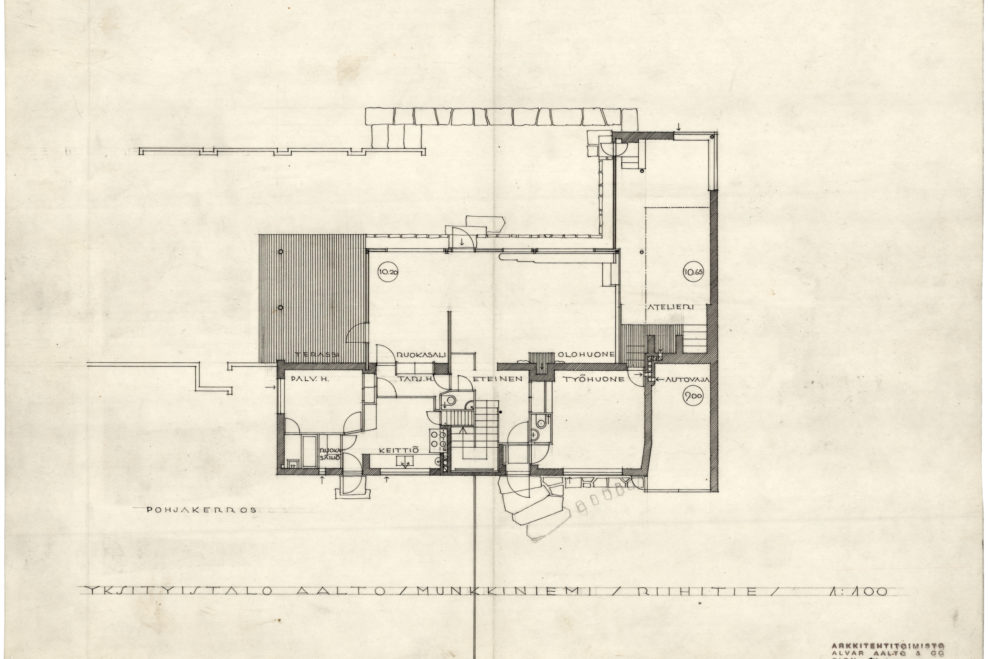
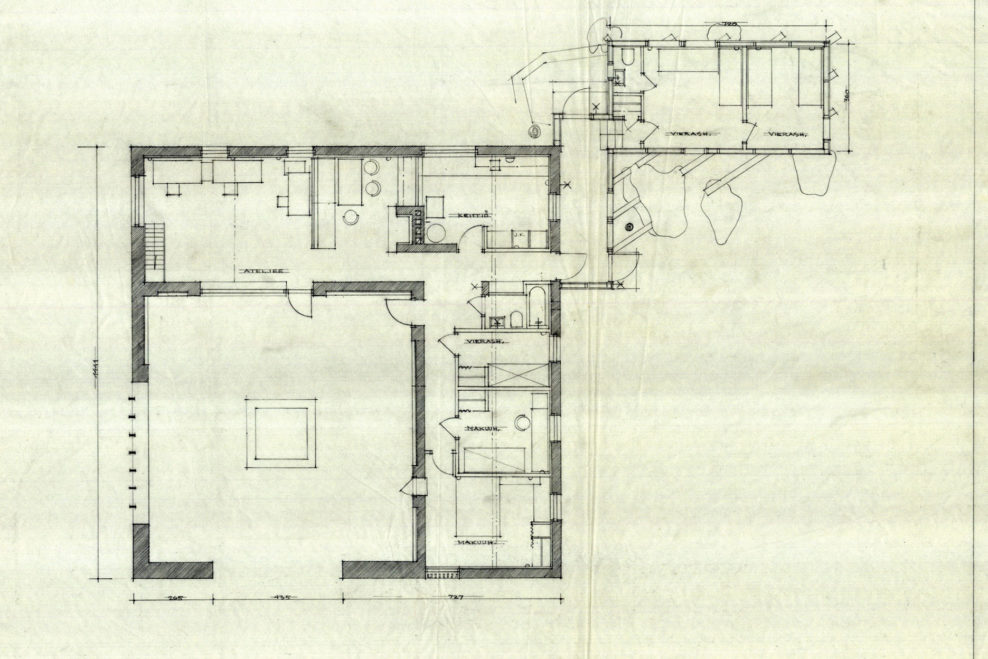
The Alvar Aalto Foundation is involved in three different case-study sites: the Aalto House (1935–36) and Studio Aalto (1954–1955, 1962–63) in Munkkiniemi, Helsinki, as well as his summer residence, the Muuratsalo Experimental House (1952–54) in Säynätsalo, Jyväskylä.
“Smaller buildings were chosen from among Aalto’s sites, as this supports the project’s goal of producing a monitoring method that is widely applicable by as many building owners as possible,” says Tom Lammi.
For the project, the Alvar Aalto Foundation is monitoring the conditions at the Aalto House, Studio Aalto, and Muuratsalo Experimental House. Humidity and temperature sensors will collect condition data throughout the project, and the resultant data will be used to prepare for the changing conditions caused by climate change. “Monitoring and recording conditions with data loggers is an important addition to the range of methods available for the long-term maintenance of the built heritage,” says Lammi.
Previous renovation work carried out at the Aalto office’s sites is also being studied during the project, as it may have an impact on the fault tolerance of buildings and building components with regard to climate risks. The aim is to obtain information on how to safeguard and manage the built heritage in changing climatic conditions, and thus to ensure its preservation for future generations.
The Aalto House, Studio Aalto, and Muuratsalo Experimental House are included in the Aalto Works proposal, which incorporates 13 Aalto sites in all and was submitted to the UNESCO World Heritage Committee in early 2025, with a decision expected in July 2026.
The results of the project and the monitoring method will help manage the built heritage in the future
During the project, data will be gathered on the characteristics and local features of the sites under study, on local observations and forecasts of climate change, and on the effects of each microclimate. The case-study data will be used to devise a monitoring method that meets the needs of owners and managers of national built-heritage sites as broadly as possible. The development of the monitoring method will take into account the diversity of the sites and the varying resources of those maintaining them. The project will end in March 2027, and the monitoring method will then be made available to everyone interested in the topic on the Korjaustaito.fi website run by the Finnish Heritage Agency.
The Cultural Heritage and Climate Change project is being carried out by the Governing Body of Suomenlinna, the Finnish Heritage Agency, the Alvar Aalto Foundation, and the University of Oulu. The project, which is co-funded by the Centre for Economic Development, Transport and the Environment (ELY Centre) of Northern Ostrobothnia and the Council of Europe, is part of the European Regional Development Fund’s (ERDF) Innovation and Skills in Finland 2021–2027 programme. Read more about the project and related reports here.
The Alvar Aalto Foundation promotes the preservation of Alvar Aalto’s architectural heritage. The Foundation’s Architectural Heritage Department conducts historical building surveys and inventories, as well as assessments of architectural protection values, and provides expert assistance in renovation projects and maintenance issues. It attempts to find the best design solutions, repair methods, and materials, while respecting Aalto’s original architecture and goals. The Foundation holds an extensive archive of original drawings from Aalto’s architect’s office, as well as an archive of photographs and construction documents, which are used in planning renovations.
Read more about the Alvar Aalto Foundation’s built-heritage work on the project here.
Inquiries: Alvar Aalto Foundation
Architecture Researcher Tom Lammi
+358 (0)40 355 9049
tom.lammi@alvaraalto.fi
Architect Justiina Mäenpää
+358 (0)40 567 5600
justiina.maenpaa@alvaraalto.fI
Conservator Susanna Pusa
+358 (0)44 558 7348
susanna.pusa@alvaraalto.fi
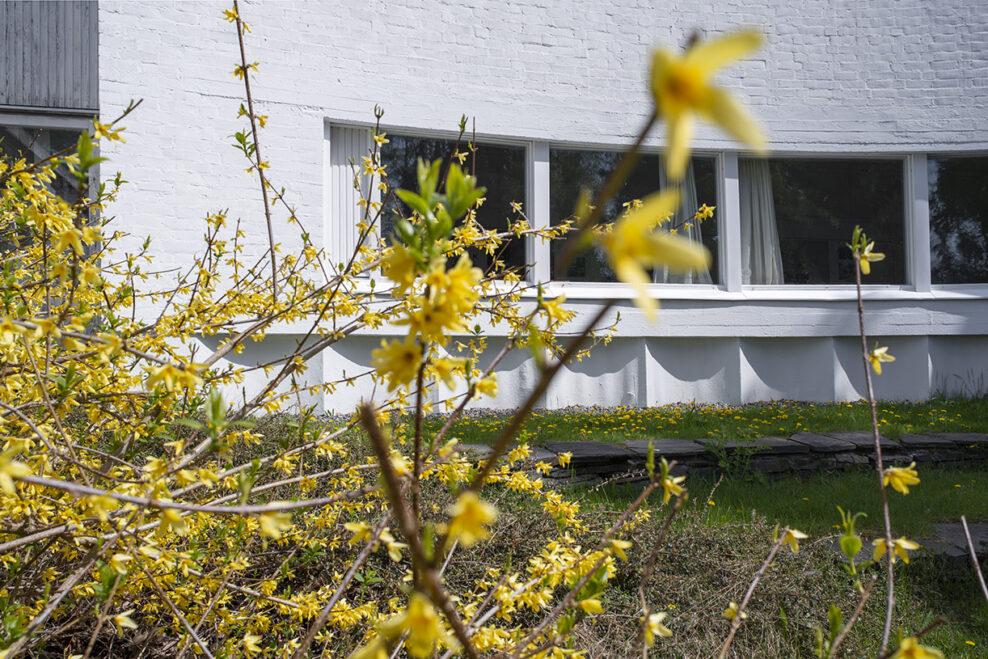
Studio Aalto (1954–55; 1962–63), Helsinki. Photo Rauno Träskelin, Alvar Aalto Foundation.