”In the afternoon, I reach a floor where, unlike all the others, the surface is wood. People unknown to me sit in chairs in a queue along the corridor. They are waiting to get into the closed rooms on the other side. I catch onto the brass of the low-hanging lamps and fall onto the faces of those waiting, leaving gold beneath their tired eyes.”
In April, 13 Stories about Humane Design opens in the Aalto2 Museum Centre Gallery. The exhibition stages an intriguing dialogue between Aalto’s designs and fictional users’ experiences. What does a new home look like through the eyes of a child? What does it sound like when architecture resonates? How does a hospital building boost patients’ sense of community? The exhibition seeks new approaches to architecture – and, above all, it views Alvar Aalto’s buildings from a humane perspective.
The Alvar Aalto Museum has invited writer Sanna Puutonen to empathise with Aalto’s buildings via the experiences of their users: the result is thirteen fictional stories. The stories are snapshots that bring the buildings to life. They add a human layer to the architecture, the main character in and around the built space can be someone settling into a house, sensing its atmospheres or, for instance, watching the play of light on the surfaces of its different materials.
“As an artform, architecture is like music. Like a symphony that has its beginnings in the composer’s pen. For it to be created, architecture, too, requires cooperation between professionals from different fields. It only takes on its final form in interaction with its audience or its users. It’s impossible to write about architecture – and especially about Alvar Aalto – without taking the human factor into account,” Sanna Puutonen says.
“Aalto’s buildings came about during a period of transition, when Finland developed into the welfare state that we know today. The texts in the exhibition each offer one perspective on the significance of Aalto’s works, not just in the lives of individuals, but in Finnish society as a whole,” Puutonen says of the process involved in producing the exhibition texts.
The idea of interdisciplinarity in art originally came from Alvar Aalto, who hoped that the museum that bears his name would become a vital, functional art institution, a shared forum for different branches of art. The museum is responding to Aalto’s wishes with an exhibition that highlights the conversation between different artforms by combining architecture with literature – and also by creating a reading experience out of responses to architecture.
Thirteen key Aalto sites
The thirteen architectural sites in the exhibition form the Aalto Works series, which has been proposed for designation as a UNESCO World Heritage Site. The sites represent key buildings in the development of the Finnish welfare state, where architecture provides a setting for life and human activity.
The exhibition opens with a gem of functionalism, Paimio Sanatorium, which was stunningly modern for its time. The Sanatorium’s design utilised the latest developments in medicine and psychology. At the same time, it recognised the overall impact of architecture and the environment as elements that promote patients’ recovery. At its best, good architecture makes it possible to take people into account as individuals and as members of a community.
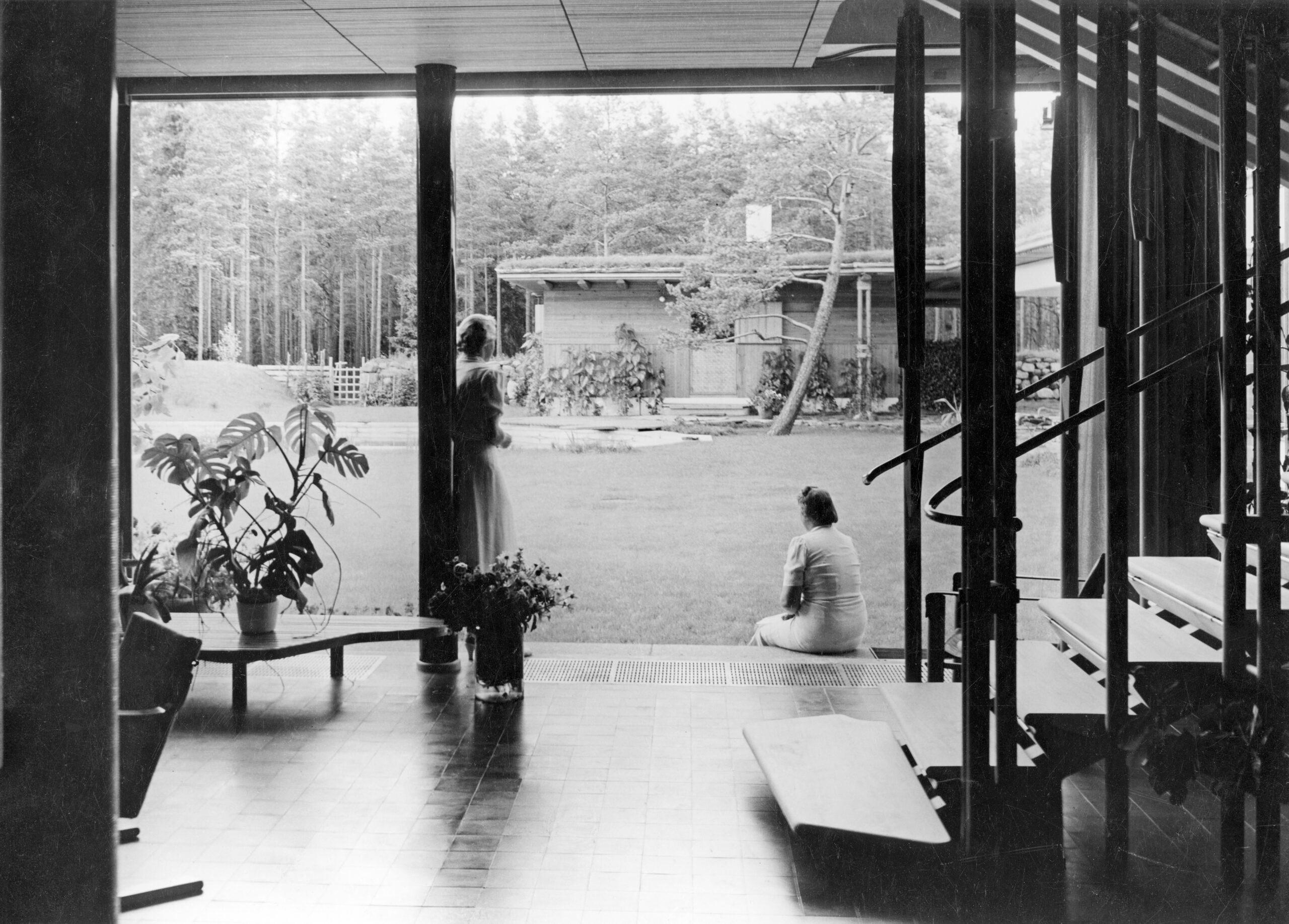
Aalto was interested in housing solutions throughout his career. High-quality architecture enables higher standards of living and improved housing practices, regardless of residents’ social status. Housing-design solutions have varied at different times, but the experience of home is universal and timeless. As an early forest suburb, the Sunila residential district in Kotka pointed the way for the design of workers’ housing in traditional factory areas. Today, Sunila is an urban district valued by its residents and a leisure-home destination with international appeal. The Aalto House, a modern home and office built for themselves by Aino and Alvar Aalto in Munkkiniemi, Helsinki, combined work and family life. The Aaltos designed Villa Mairea, a renowned total work of art, for their friends and patrons of the arts Maire and Harry Gullichsen in Noormarkku, Pori. In this organic, light-filled home, interior design, industrial arts and architecture blend seamlessly together, showing how integral a part of life art can be.
Säynätsalo Town Hall, rich in materials, but modest in scale, was designed as a centre of everyday democracy that serves the needs of local residents. The spatial layout of Studio Aalto in Munkkiniemi, Helsinki, accentuated the communal, egalitarian character of the architect’s office’s working process. Light guides those who pass through the interiors of both sites. The stairs lead to the highpoint, the building’s main space – a site and setting for creative work or wise decisions.
The larger building complexes are like cities in miniature – they are landmarks that rise up out of the heart of the landscape, which is criss-crossed by paths that wind between the different buildings and functions. The University of Jyväskylä campus on Seminaarinmäki hill reflects the potential for intellectual development of both individuals and society, providing young adults with a superb study environment. Everyday life and the sacred meet in the Church of the Three Crosses – its premises in a small conurbation can also be used for leisure activities. The buildings of the Aalto Centre in Seinäjoki are spaces for local residents’ everyday lives, while, at the same time, attracting international architecture tourists.
Aalto’s designs included several public buildings dedicated to culture, which, for instance, reflect the role and significance of music and other artforms in society as integral elements of the good life. The House of Culture was a landmark in a working-class district built in Helsinki in the 1950s, a gathering place for practitioners of intellectual and physical culture, and now a venue for a variety of cultural events. Built in a central location in the capital city, immediately on its completion, Finlandia Hall served as a stage for world politics and, later, for a wide range of conferences and concerts. The National Pensions Institute in Helsinki can be seen as the “headquarters” of the welfare state, its meticulously designed, costly material choices momentarily elevate office life above the norm for both employees and clients.
The Muuratsalo Experimental House on an island in Lake Päijänne, known for its various experiments with bricks, tiles and bricklaying, is ensconced in the midst of nature and incorporates the landscape into its architecture. For Aalto, the place was a kind of laboratory and a playground that fascinatingly combined artistic freedom, time spent with friends, and summers enjoyed in privacy.
The artefacts, photographs and drawings on display are from the Alvar Aalto Foundation’s archives and collections. The copious photographic material provides background to the history of the buildings over the decades. It opens windows into homes and spaces for work, healing, and the experience of the sacred, spanning the entire spectrum of life. The objects speak of the important role played by design in the Aaltos’ holistic architectural thinking. The original architectural drawings give the exhibition the designer’s unique personal signature.
The exhibition’s visual identity was designed by architect Justiina Mäenpää.
13 Stories about Humane Design
24.4.2026–10.1.2027
Aalto2 Museum Centre Gallery
Alvar Aallon katu 7, Jyväskylä
Exhibition enquiries:
Mari Murtoniemi
Alvar Aalto Museum
mari.murtoniemi@alvaraalto.fi
+358 (0)40 355 9162